
What Thermal Label Printer Downtime Really Costs You in the Warehouse
thermal label printer downtime

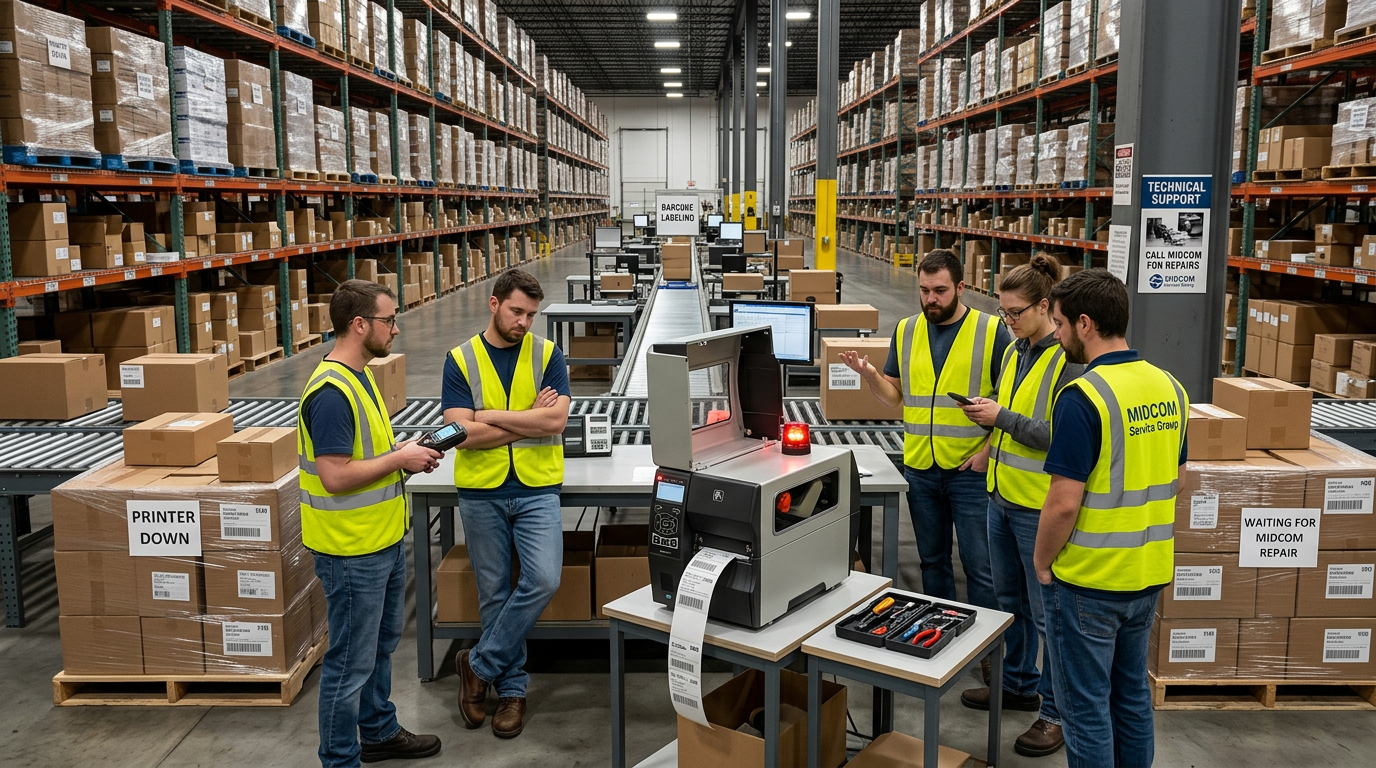
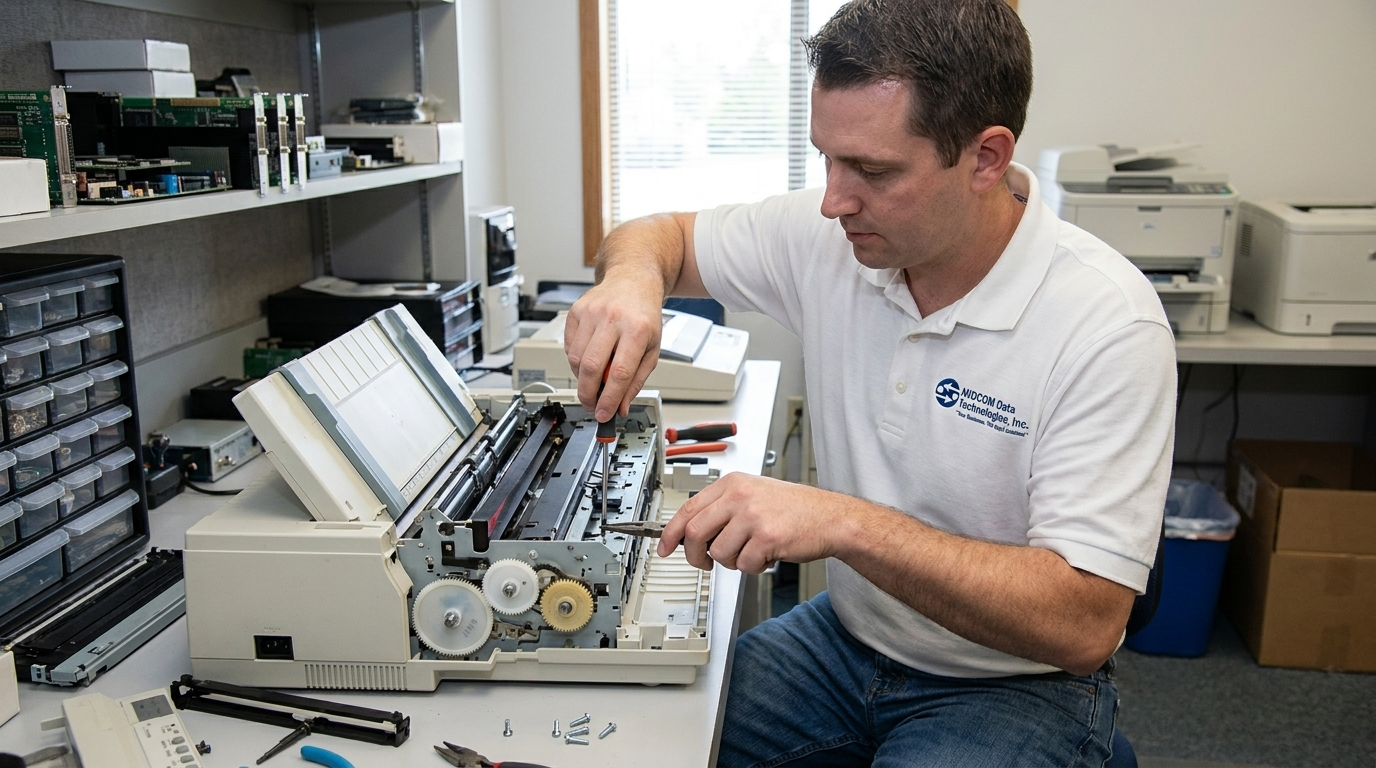
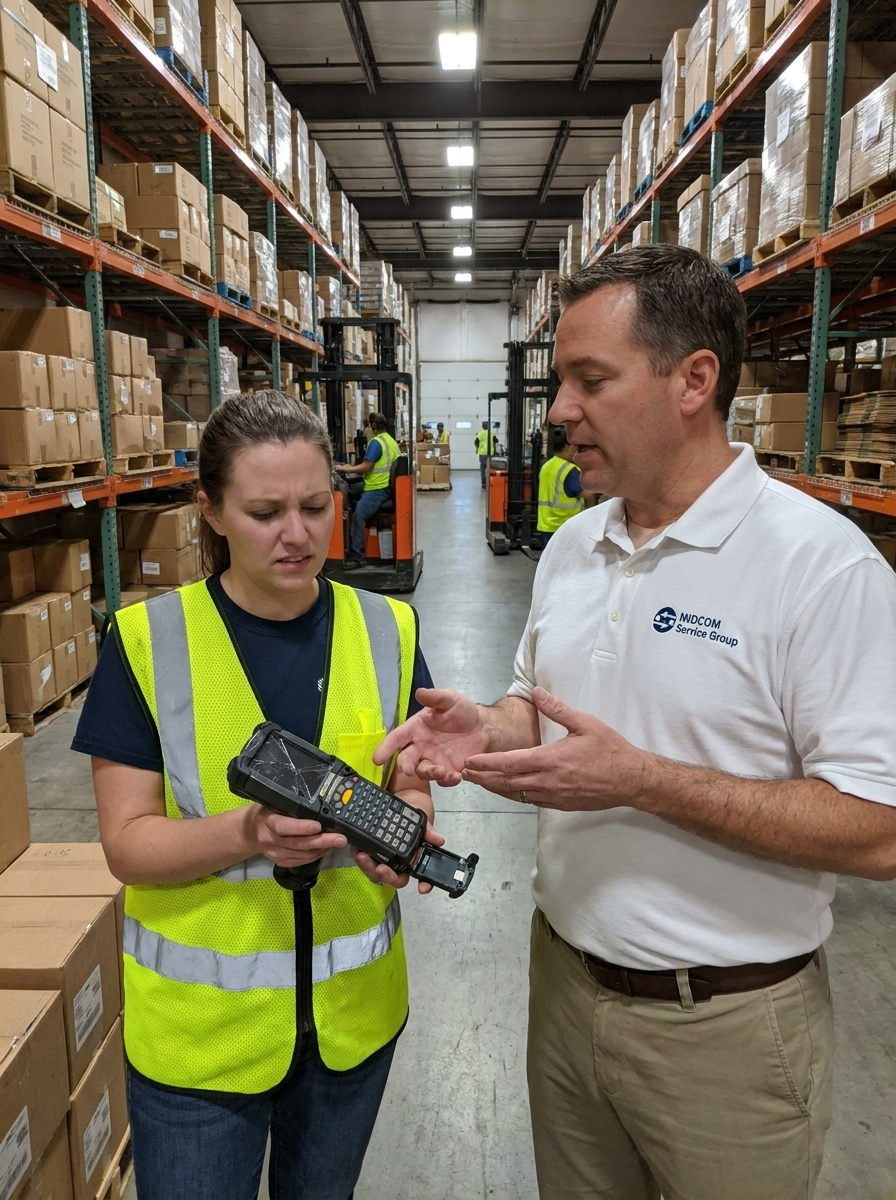
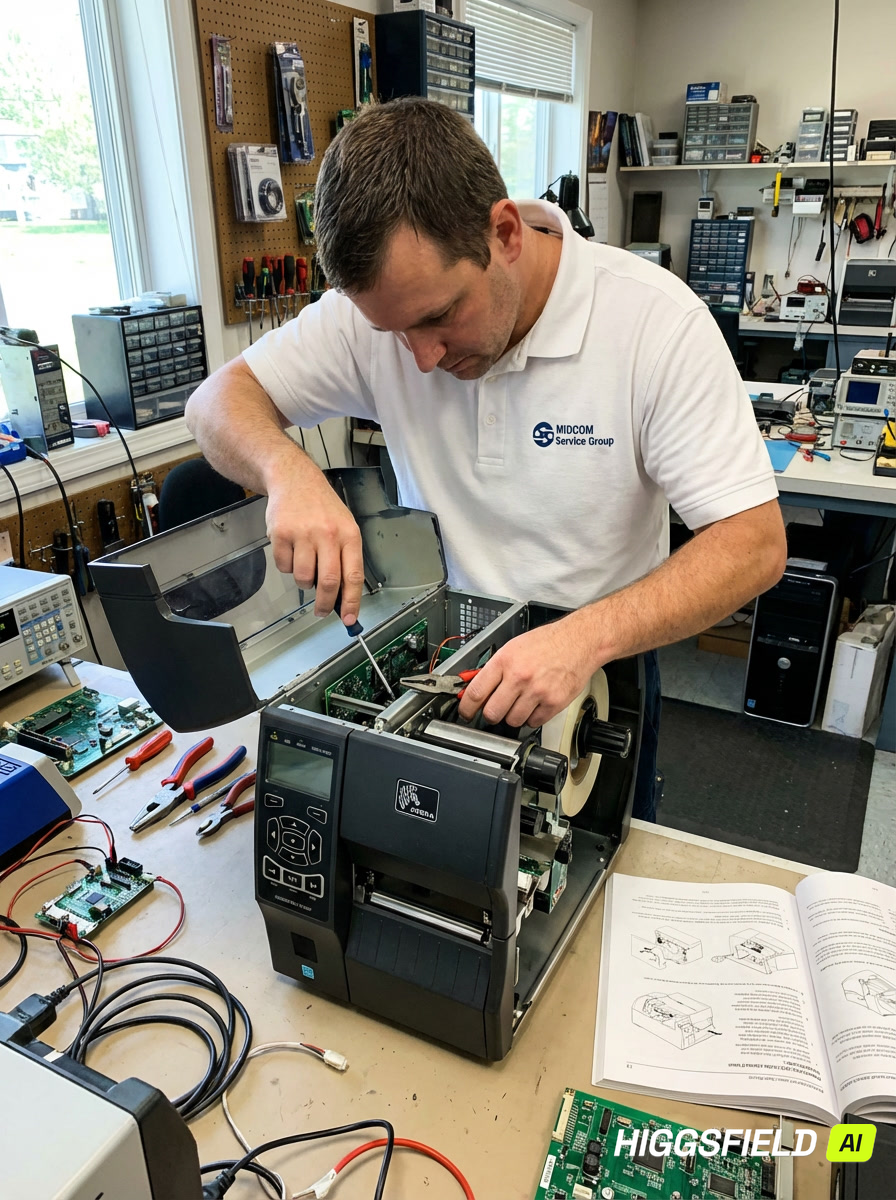
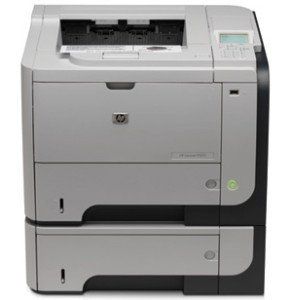
It starts small. A printhead stops feeding. A ribbon sensor throws an error nobody's seen before. A printer that's been chugging along for three years suddenly won't calibrate. Someone on the floor waves down a supervisor, the supervisor calls IT, IT calls the printer vendor, and now everyone is standing around a beeping thermal label printer instead of moving product.
That five-minute inconvenience is rarely just five minutes. In most warehouses, a single thermal label printer failure quietly triggers a chain reaction: idle pickers and packers, a shipping lane that backs up, a truck that leaves without the freight it was supposed to carry, and — if it drags on long enough — a missed SLA that costs far more than the part that broke. Thermal label printers are one of the least glamorous pieces of warehouse equipment, and one of the most disruptive to lose.
This post breaks down where that cost actually comes from, why it's bigger than most operations teams assume, and how to put a real number on it using the same downtime cost method behind MIDCOM Service Group's Downtime ROI Calculator.
Why a "Small" Printer Problem Becomes a Big Warehouse Problem
Thermal label printers sit at a chokepoint. Every case, pallet, or parcel that leaves a facility needs a label — a shipping label, a compliance label, a carton ID, a pick label. When the printer at that station goes down, nothing downstream of it can move, even if every other part of the operation is running perfectly.
That's what makes label printer downtime disproportionately expensive compared to its footprint. A $1,500 desktop thermal printer or a $2,500 industrial unit can stall a six-figure shipping operation until it's working again.
The cost isn't the broken machine — it's everyone and everything waiting on it.
Where the Cost Actually Comes From
When a thermal label printer goes down without a service contract in place, the cost stacks up in a fairly predictable sequence:
1. Idled labor. The picker, packer, or dock worker who needs that station can't keep working. Depending on how the floor is laid out, one dead printer can idle two or three people at once — not because they're broken, but because there's nowhere for their work to go.
2. Troubleshooting time. Someone has to notice the printer is down, try the obvious fixes, and then figure out whether it's a jam, a printhead issue, a driver problem, or something that needs a technician. This can eat 30–90 minutes before anyone even picks up the phone to call for help.
3. Sourcing a part or a loaner. If there's no spare printer sitting on a shelf and no printhead in inventory, the clock keeps running while someone locates a replacement part, a rental unit, or a technician's next available slot. This is usually where a "quick fix" turns into a multi-hour, or multi-day, outage.
4. Missed-SLA and expedite costs. This is the part that turns an operational headache into a financial one. If downtime runs past a carrier cutoff, a customer delivery window, or a retailer compliance deadline, you're looking at late-shipment penalties, chargebacks, or the cost of an expedited shipment to make it right.
5. The repair or replacement bill itself. Labor, parts, and — for older printers — the very real possibility that the part simply isn't manufactured anymore.
Individually, none of these look catastrophic. Added together, incident after incident, across a whole fleet, they add up to a number most operations teams have never actually calculated.
Putting a Real Number on It
Here's a simplified version of the same math used in the Downtime ROI Calculator on MIDCOM's site — the formula is straightforward, and it's worth running with your own numbers:
Current cost = Incidents/year × [(Hours down × Workers idled × Labor rate) + Missed-SLA cost]
Let's walk through an illustrative example for a mid-sized operation running 10 thermal label printers:
| Input | Value |
|---|---|
| Printers in the fleet | 10 |
| Downtime incidents per printer, per year | 3 |
| Hours down per incident (no contract) | 6 |
| Workers idled per incident | 3 |
| Fully-loaded labor cost, per hour, per worker | $28 |
| Missed-SLA / expedite cost per incident | $450 |
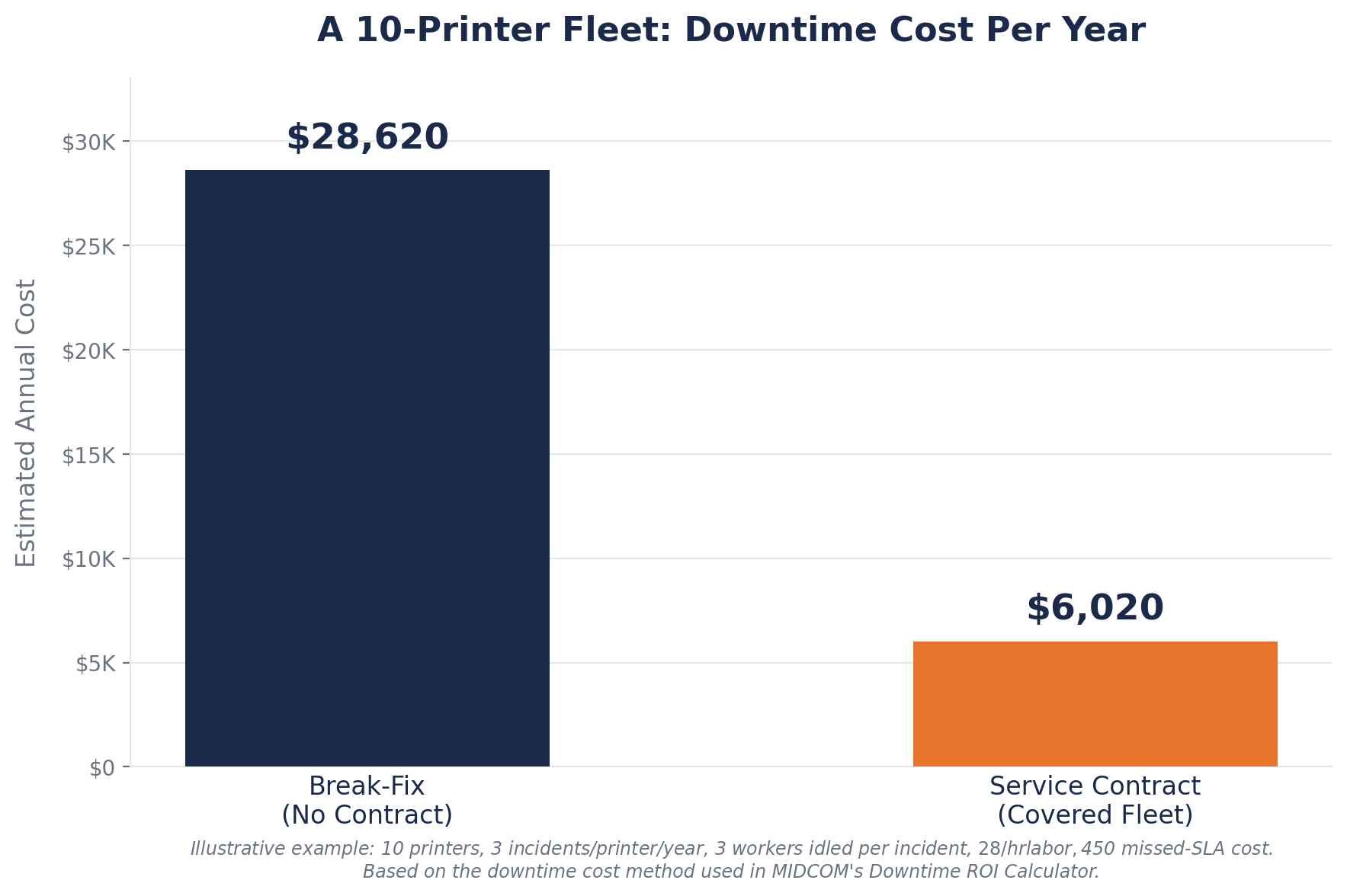
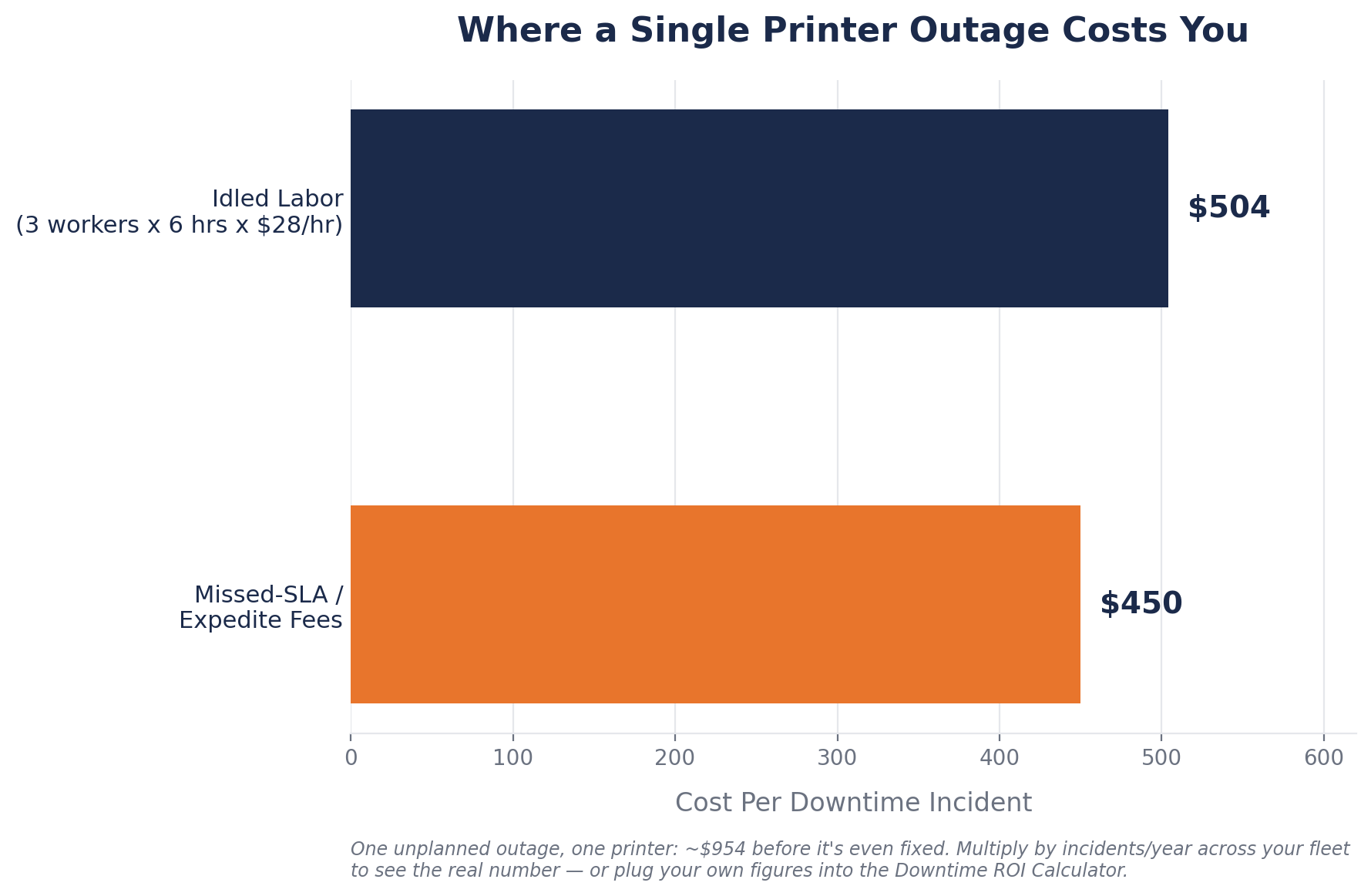
Run the numbers, and one incident alone costs roughly $954 — 6 hours × 3 workers × $28/hour ($504) plus the $450 missed-SLA hit. Multiply that by 30 incidents a year across the fleet (3 incidents × 10 printers), and you land at just over $28,000 a year in downtime cost that never shows up as a line item anywhere — it's just absorbed into "the way things are."
Now compare that to what happens when a service contract guarantees a next-business-day (or faster) repair and keeps you inside your SLA windows. Hours down per incident might drop from 6 to 1, and the missed-SLA cost drops out entirely because the fix arrives before it becomes a shipping problem. Even after adding in the cost of the contract itself, the picture changes dramatically.
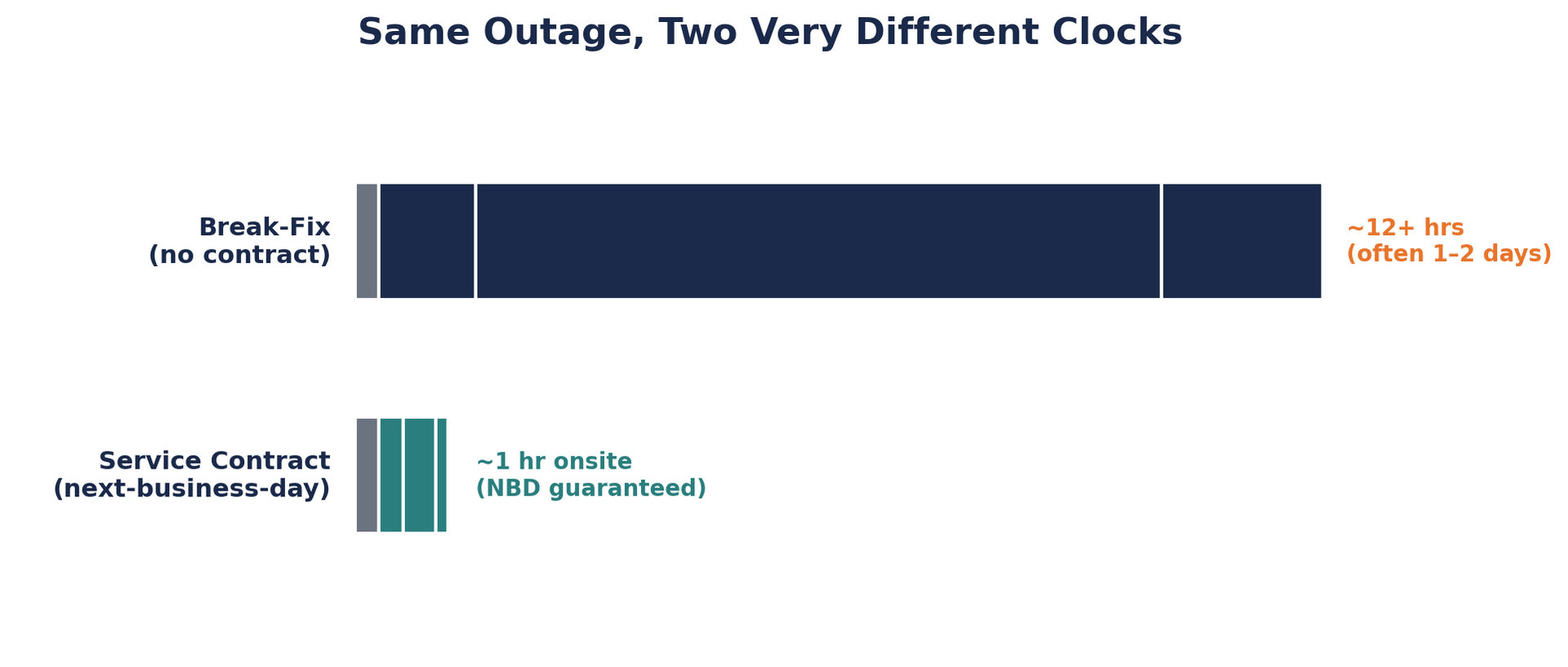
In this example, moving from break-fix to a service contract takes the annual cost from roughly $28,600 down to about $6,000 — including the cost of the contract itself — for a net annual savings north of $22,000 and a payback period of well under two months. That's the kind of return that's easy to miss when repairs get paid out of a "miscellaneous maintenance" line one invoice at a time, but impossible to miss once it's laid out as a single annual figure.
Your own numbers will look different depending on fleet size, incident frequency, labor rates, and how strict your SLAs are — which is exactly why it's worth plugging your real figures into the Downtime ROI Calculator rather than relying on someone else's example. It uses the same method shown above, scaled to your fleet, and gives you a gross savings figure, a net annual return, an ROI percentage, and a payback period in minutes.
The Costs That Don't Show Up in the Math
The formula above captures the direct, measurable costs. A few more tend to compound quietly over time:
- Aging fleets get more expensive to keep alive. Once a printer model is a few years old, sourcing OEM parts gets slower and pricier, and eventually parts stop being made altogether. Every additional year without a replacement plan raises the odds that the "quick fix" becomes "the printer is unrepairable, and now we need to buy a new one under time pressure."
- Customer and retailer relationships absorb the damage. A late shipment because of a printer outage doesn't come with an apology note explaining it was a printhead failure — it just shows up as a missed delivery window. Repeated misses erode trust with customers and can trigger compliance penalties from retail partners with strict labeling requirements.
- Reactive maintenance creates its own overhead. Every outage pulls a supervisor, an IT person, or an operations manager away from their actual job to manage a fire drill. That's real time, even if it never gets logged as a "cost."
- Unpredictability makes budgeting harder. Break-fix repair costs are inherently unpredictable — you don't know when a printer will fail, what will be wrong with it, or what the parts and labor bill will look like until it happens. That unpredictability makes it difficult to plan a maintenance budget with any confidence.
What Closing the Gap Actually Looks Like
The fix isn't complicated, even if it's often overlooked: reduce the two variables that drive the cost equation — hours down per incident, and the odds of missing an SLA because of it. In practice, that means:
- Guaranteed response times, so "hours down" shrinks from most of a business day to closer to an hour.
- Parts included as part of the service, so there's no separate scramble to source a printhead or a platen roller once a technician is already onsite.
- Priority queue placement, so a fleet under contract isn't waiting behind every other service call in the region.
- Replacement protection for aging units, so a printer that's genuinely reached end-of-life gets swapped instead of leaving a station down indefinitely while parts are searched for.
This is precisely the model behind MIDCOM Service Group's printer service contracts: a flat annual rate, unlimited service calls, all parts included, and next-business-day onsite response from a nationwide network of over 3,500 certified technicians — with printer replacement protection if a part becomes unavailable for covered models. It replaces the unpredictability of break-fix repairs with a single, budgetable number.
Run Your Own Numbers
The gap between "printer went down for a few hours" and "printer went down and cost us thousands" is almost always a function of how fast the fix arrives and whether that fix beats your SLA clock. Most warehouses have never measured that gap in dollars — they just absorb it, incident after incident, and call it a normal cost of doing business.
Before assuming your downtime costs are a rounding error, it's worth spending two minutes with the numbers. Head to MIDCOM's Printer Service Contracts page and enter your fleet size, incident frequency, downtime hours, idled labor, and SLA exposure into the Downtime ROI Calculator. It will show you your current annual downtime cost, what that cost looks like under a service contract, your projected ROI, and how many months it takes to pay for itself.
For most operations running thermal label printers at any real volume, the answer isn't close.
Learn More About Annual Service Contracts with MIDCOM →
MIDCOM has been helping companies with warehouse solutions since 1982. Talk to one of our Specialists about smartphone mobile devices, thermal barcode label printers, mobile barcode scanning devices, software or mobile workstations today. Call now (800) 643-2664.
Annual Protection Plans